
Soft Washing vs. Pressure Washing: Which Does Your Home Need?
A complete homeowner’s guide to soft washing vs. pressure washing, safe surfaces, SH percentages, costs, risks, and the right method for North Texas homes.
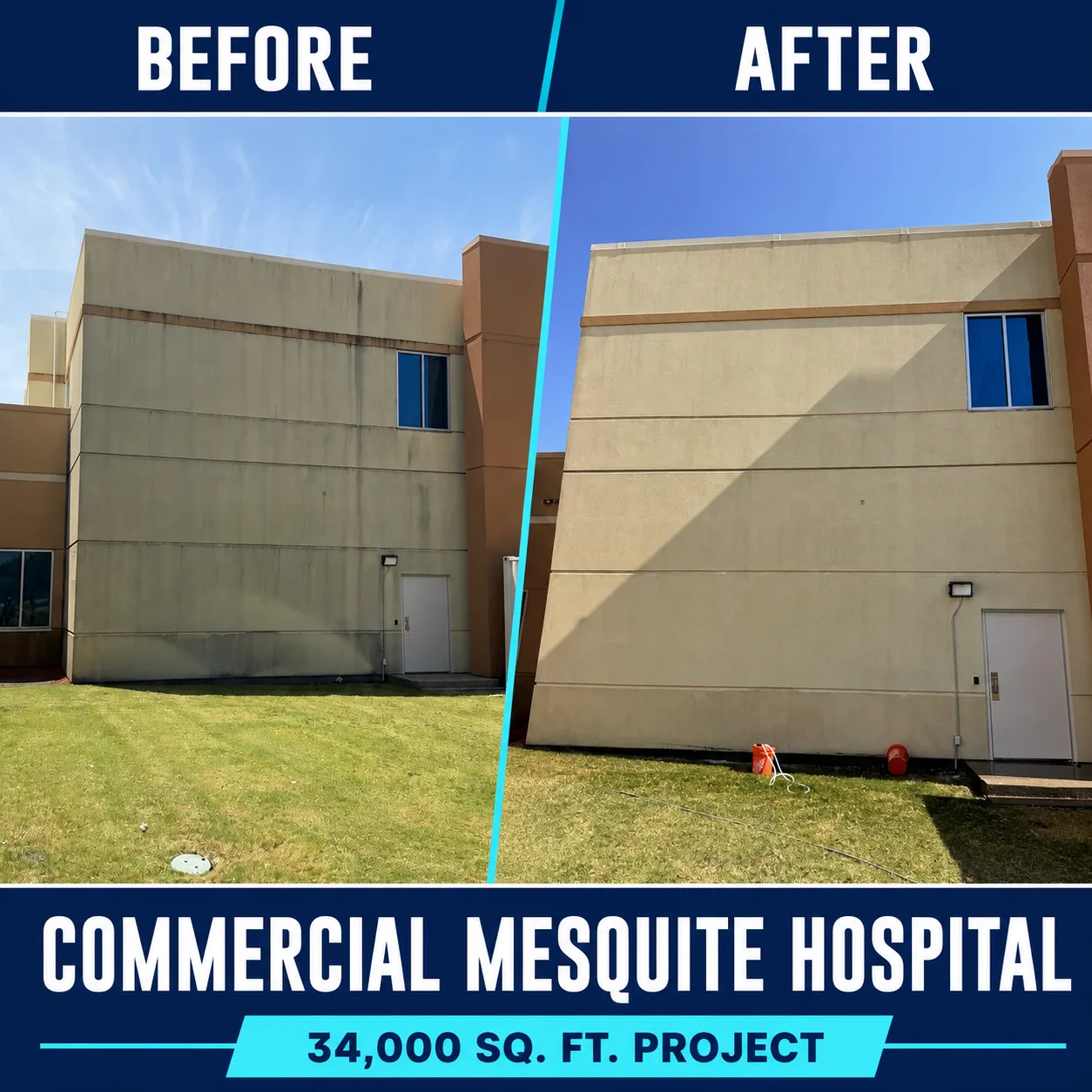
Soft washing and pressure washing are not competing names for the same service. They are two different ways to remove exterior buildup, and each one solves a different problem. The easiest way to understand the difference is this: pressure washing depends mostly on water force, while soft washing depends mostly on chemistry, contact time, and a gentle rinse.
That difference matters because a home is made from many materials. The concrete driveway that supports vehicles is not the same as painted trim, vinyl siding, fiber-cement boards, window seals, wood fencing, stucco, or asphalt shingles. A method that cleans one surface beautifully can etch, strip, loosen, flood, or discolor another. Good exterior cleaning begins with identifying the surface and the stain—not simply reaching for the strongest machine.
Soft washing vs. pressure washing at a glance
| Question | Soft washing | Pressure washing |
|---|---|---|
| What does the cleaning? | Cleaning solution, dwell time, then a gentle rinse | Water pressure, flow, technique, and sometimes pre-treatment |
| Best match | Organic growth on delicate or vertical exterior surfaces | Embedded dirt and buildup on durable flatwork |
| Common surfaces | Siding, stucco, painted trim, many roofs | Concrete driveways, sidewalks, patios, some masonry |
| Main risk when misused | Chemical spotting, plant damage, discoloration, runoff problems | Etching, splintering, water intrusion, coating or granule loss |
| Result | Treats organic contamination with less mechanical force | Provides immediate mechanical cleaning on suitable surfaces |
What is soft washing?
Soft washing is a low-pressure exterior-cleaning method in which a purpose-selected solution loosens or neutralizes the contamination before the surface is rinsed. The pump is used to deliver and control the solution, not to carve dirt away. In practical terms, the water hitting the home should feel closer to a strong garden-hose rinse than the concentrated cutting stream people associate with a pressure washer.
It is especially useful for organic growth: algae, mildew, mold-like staining, bacteria, moss, lichen, and the dark biological streaks often seen on roofs. These organisms do not behave like loose dust. They attach to porous or textured surfaces and can return quickly if a cleaning only removes the visible layer. A properly selected solution reaches the growth across grooves, laps, joints, and textured areas where mechanical force would be inconsistent or risky.
The word soft describes the pressure, not a casual process. Professional soft washing still requires inspection, dilution control, measured application, dwell time, runoff planning, plant protection, personal protective equipment, and a careful final rinse where the surface or product instructions call for one. More chemical is not automatically better. The goal is the mildest effective process that produces an even result without creating a new problem.
What is pressure washing?
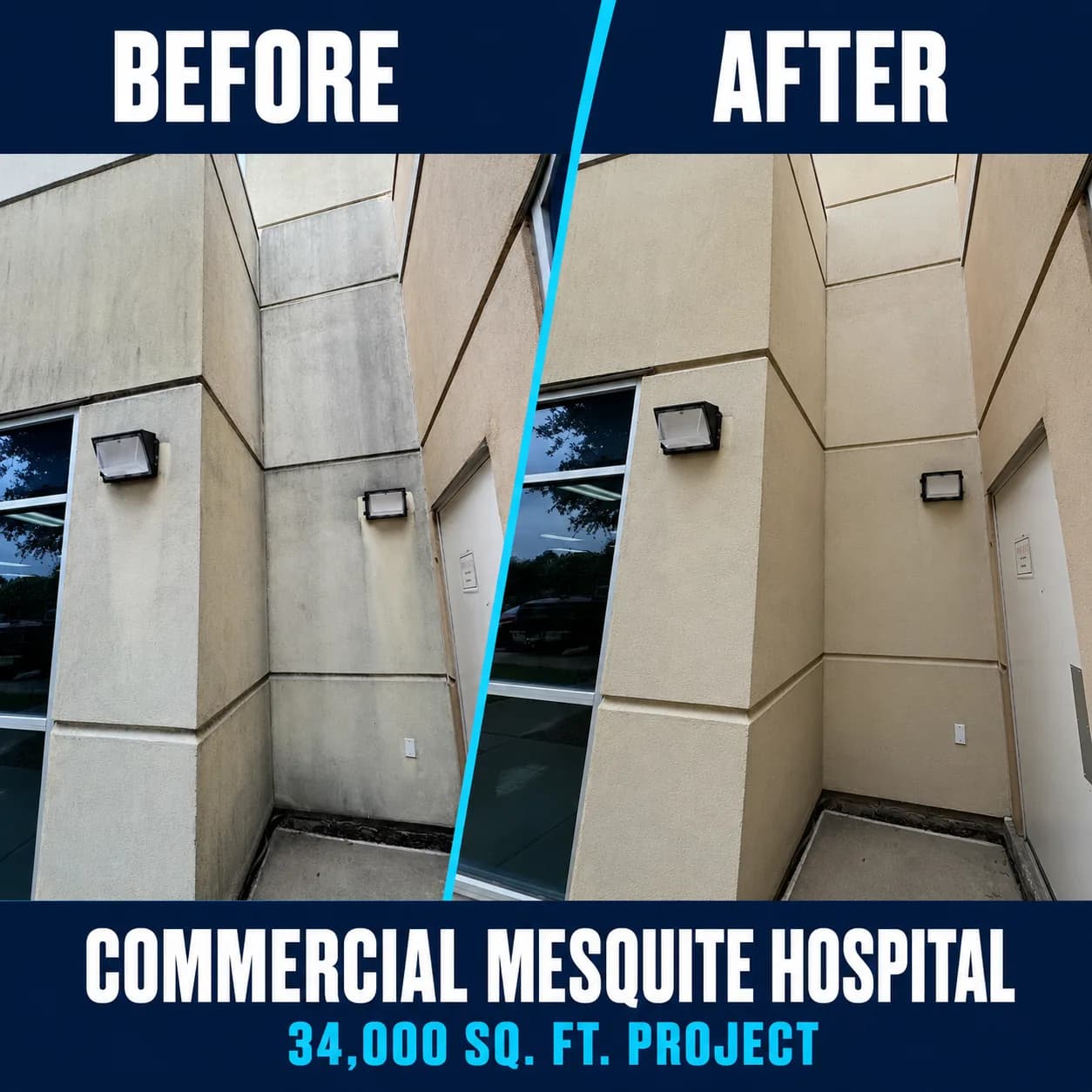
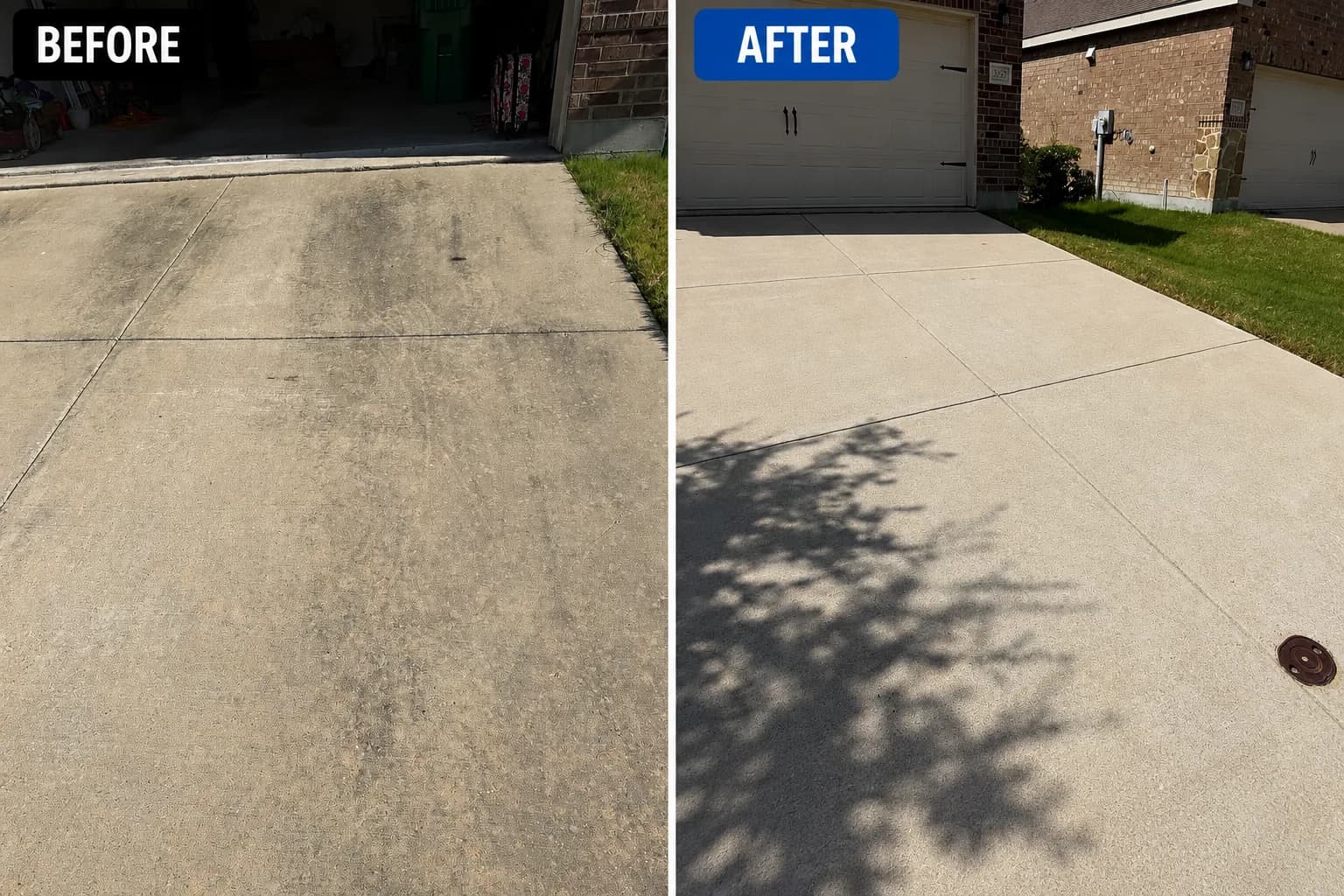
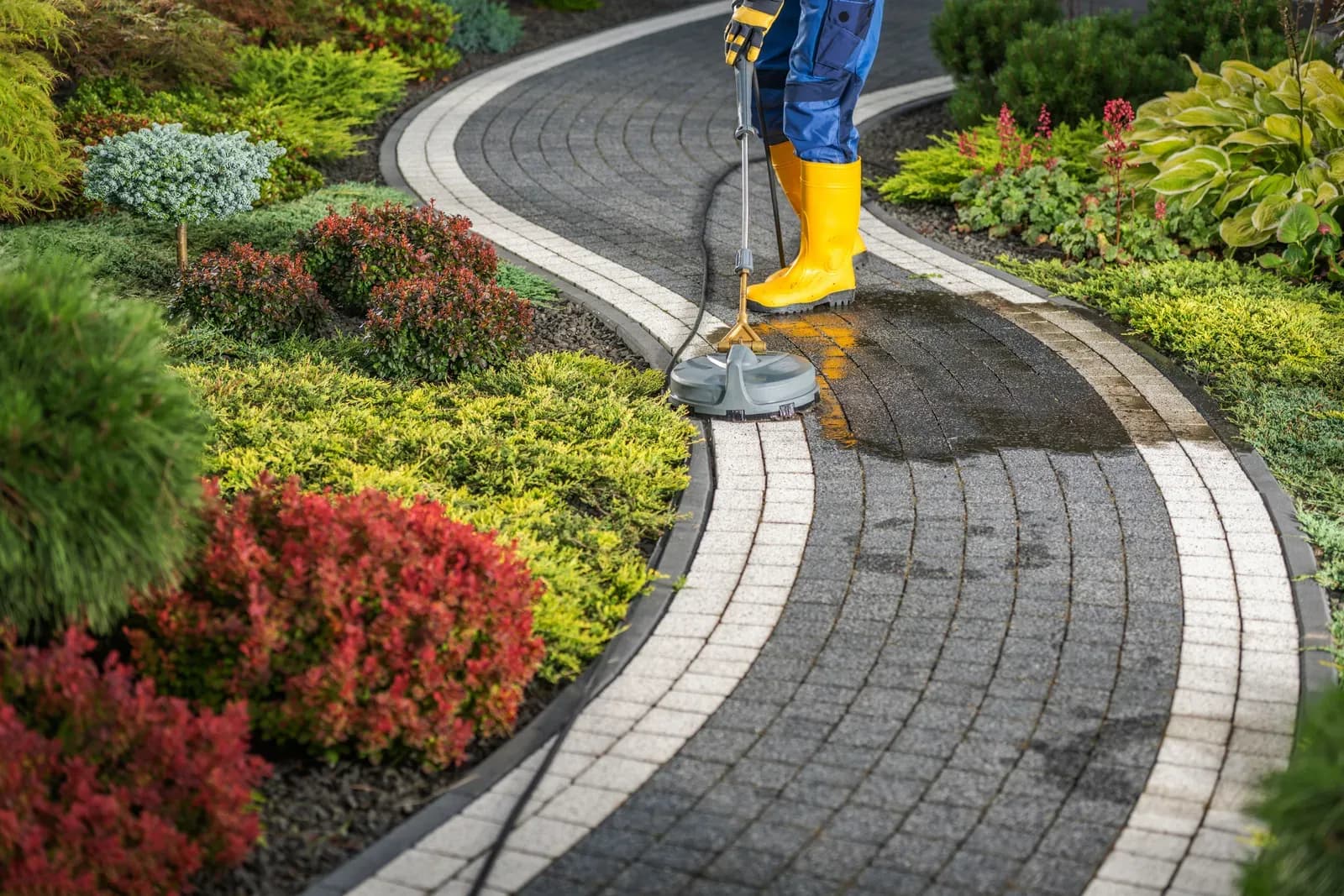
Pressure washing uses pressurized water to break the bond between a durable surface and the material attached to it. On sound concrete, a professional may combine suitable pressure, water flow, a fan pattern, consistent distance, overlapping passes, and a rotary surface cleaner. The surface cleaner helps keep the spray height and path more uniform than freehand wand marks, reducing the familiar striped or zebra-pattern result.
This method is well suited to driveways, sidewalks, concrete patios, curbs, and other hard surfaces after their condition is checked. It can lift soil, clay, pollen, mud, tire residue, and general traffic film. Some stains are chemical problems rather than pressure problems: old oil, rust, fertilizer marks, paint, battery acid, and mineral deposits may need specialty treatment, and permanent discoloration may remain. Increasing pressure is not a substitute for identifying the stain.
Pressure is only one part of the system. Nozzle angle, orifice size, flow rate, distance, machine output, surface age, existing cracks, sealers, and the operator’s movement all change the effect. Even concrete can be etched when the tip is too close or passes are uneven. New, weak, spalled, decorative, stained, or sealed concrete needs special caution and may not be a candidate for standard pressure washing.
Which method is right for each exterior surface?
A simple hard-versus-delicate rule is a useful starting point, but material-specific instructions always win. Manufacturers know how their coatings, joints, fasteners, finishes, and warranties respond to cleaning. For example, James Hardie states that a pressure washer can damage Hardie siding and recommends low-pressure water with a soft, nonmetal brush. The Asphalt Roofing Manufacturers Association says not to use a power washer or abrasive brush on algae-stained asphalt shingles.
| Surface | Usually preferred | Why |
|---|---|---|
| Asphalt shingles | Roof-specific low-pressure treatment | Protects granules and avoids forcing water beneath shingles |
| Vinyl siding | Soft wash or manufacturer-approved low-pressure cleaning | Reduces water intrusion and oxidation-mark risk |
| Fiber-cement siding | Low-pressure, manufacturer-compatible cleaning | High pressure can damage the finish |
| Painted wood or trim | Gentle cleaning after a coating test | Failing paint and soft wood can strip or splinter |
| Stucco | Low-pressure cleaning tailored to the finish | Cracks and openings can admit water |
| Sound concrete | Controlled pressure, often with pre-treatment | Durable flatwork responds well to mechanical cleaning |
| Composite decking | Follow the exact product guide | Pressure limits and warranty rules vary by product generation |
| Windows and screens | Dedicated window-cleaning methods | High pressure can damage screens, seals, and glazing |
Brick and masonry deserve individual evaluation. The brick face may be strong while old mortar joints are not. Painted brick, limewash, historic masonry, efflorescence, and oxidized surfaces each require different decisions. Likewise, a wood fence may tolerate a carefully controlled rinse but still fur, splinter, or show lap marks under excessive pressure. A test area is one of the most valuable tools on any uncertain surface.
Why North Texas homes often need a mixed approach
Forney and the surrounding North Texas communities combine heat, storm-driven dirt, pollen, irrigation overspray, shaded walls, and stretches of humidity. North-facing surfaces and areas beneath trees dry more slowly, which helps green and dark organic staining develop. Driveways collect a different mix: tire film, soil, leaf tannins, automotive drips, and dusty runoff. Because those problems are different, one cleaning method should not be forced across the whole property.
A practical whole-home plan might use a solution-led wash for siding and soffits, a manufacturer-compatible roof treatment where appropriate, traditional window-cleaning methods for glass, and controlled pressure for the driveway and front walk. That is not an upsell; it is surface matching. Separating the property into cleaning zones also makes it easier to protect outlets, cameras, door seals, landscaping, painted fixtures, and areas where runoff could collect.
What does SH percentage mean in soft washing?
SH is the industry shorthand for sodium hypochlorite, the active ingredient in chlorine bleach. When a professional mentions a 1% or 4% mix, the useful question is whether that number describes the product in the tank, the solution after proportioning, or the concentration that actually reaches the surface. Equipment can dilute a solution as it draws, injects, travels through a hose, or mixes with rinse water, so the number printed on the original container is not necessarily the number applied to the building.
The basic dilution idea is straightforward: final concentration equals the starting concentration multiplied by the fraction of the final mix that comes from the starting product. A 12.5% professional product does not remain 12.5% after controlled dilution. Household products also vary; the CDC notes that regular household bleach commonly contains about 5% to 9% sodium hypochlorite. Labels, product age, heat, sunlight, storage, equipment ratios, and measurement accuracy all affect real strength.
These ranges are not recipes and should not be treated as universal settings. A lightly stained white vinyl wall on a cool, cloudy day is different from dark porous masonry in full sun. Oxidized siding can reveal permanent color variation after cleaning. Unknown paint can react unexpectedly. Roof composition and manufacturer requirements matter. Professionals start with the surface, choose a compatible process, test when appropriate, and increase strength only when the condition justifies it.
Roof guidance helps explain why roof mixes are discussed differently. ARMA’s published material describes diluted chlorine-bleach cleaning and specifically warns against power washing asphalt shingles. A historic ARMA recommendation commonly cited by the roofing industry uses a 50:50 blend of laundry-strength bleach and water. Because laundry bleach itself varies, that ratio could produce a broad final range. It is safer to follow the current shingle manufacturer’s instructions than to copy a ratio from a generic online video.
How a careful exterior-cleaning process works
1. Inspect before applying anything
The crew identifies siding and roofing materials, tests water access, notes oxidation or failing coatings, and looks for cracked mortar, open weep holes, loose trim, damaged screens, unsealed outlets, cameras, door gaps, and sensitive landscaping. Existing damage should be documented so cleaning does not get blamed for a condition that was already present.
2. Protect the property
Windows and doors are checked, exterior electrical items are considered, movable décor is relocated, and people and pets are kept out of the work area. Plants may be pre-wet and continually rinsed, while downspouts and runoff paths are monitored. Wind matters because it changes overspray control and may make postponing the job the responsible choice.
3. Match treatment, dwell time, and agitation
The solution is applied evenly at an appropriate strength and allowed to work without drying on the surface. Some stains respond to chemistry; others need gentle brushing or mechanical cleaning. Hot sun can shorten dwell time, while cool conditions may lengthen it. The operator watches the surface instead of treating the timer as the only decision-maker.
4. Rinse, review, and set expectations
Compatible surfaces are rinsed with controlled water, plants receive a final rinse, and the work is inspected from several angles. Not every mark is removable. Oxidation, faded paint, rust, artillery fungus, irrigation deposits, mortar staining, and deeply absorbed oil may remain or require a separate specialty process. Honest expectations protect the surface and the homeowner.
Common mistakes homeowners should avoid
- Using a narrow pressure tip to chase a stubborn spot, which concentrates force and can permanently etch the surface.
- Spraying upward beneath siding laps, shingles, soffits, vents, or flashing where water is not intended to enter.
- Assuming every dark stain is mold or algae; rust, oxidation, tannins, soot, and minerals need different treatment.
- Copying an SH ratio without checking the starting concentration, product label, surface instructions, weather, or equipment dilution.
- Letting a cleaning solution dry on glass, painted metal, fixtures, plants, or the surface being cleaned.
- Skipping a test area on oxidized siding, old paint, sealed concrete, wood, composite decking, or unknown coatings.
- Believing more pressure or stronger chemistry always means a better clean. It usually means less room for error.
DIY work may be reasonable for a small, ground-level rinse with a manufacturer-approved product and clear label directions. Roof work, multi-story elevations, heavy chemical application, unknown stains, and surfaces with existing damage carry much higher consequences. The cost of professional cleaning should include judgment, insurance, equipment, property protection, and the ability to recognize when a surface should not be cleaned in the planned way.
So which service should you request?
You do not need to diagnose every stain before asking for a quote. Describe what looks dirty, where it is, how long it has been present, and whether the surface is painted, sealed, repaired, or newly installed. Photos help. A responsible exterior-cleaning company should recommend the method after evaluating the surface—not ask you to choose between soft washing and pressure washing as though they were interchangeable menu upgrades.
For a typical Forney-area home, the safest answer is often a combination: soft washing for compatible house surfaces, a roof-specific low-pressure process for shingle algae when appropriate, controlled pressure for sound concrete, and dedicated tools for windows. The result should be a cleaner property without sacrificing the materials that make up the home.
Sources and manufacturer guidance
Cleaning recommendations change by product, so homeowners should check the current instructions for their exact roofing, siding, decking, and coating. The following references support the safety and material-selection principles in this guide.